
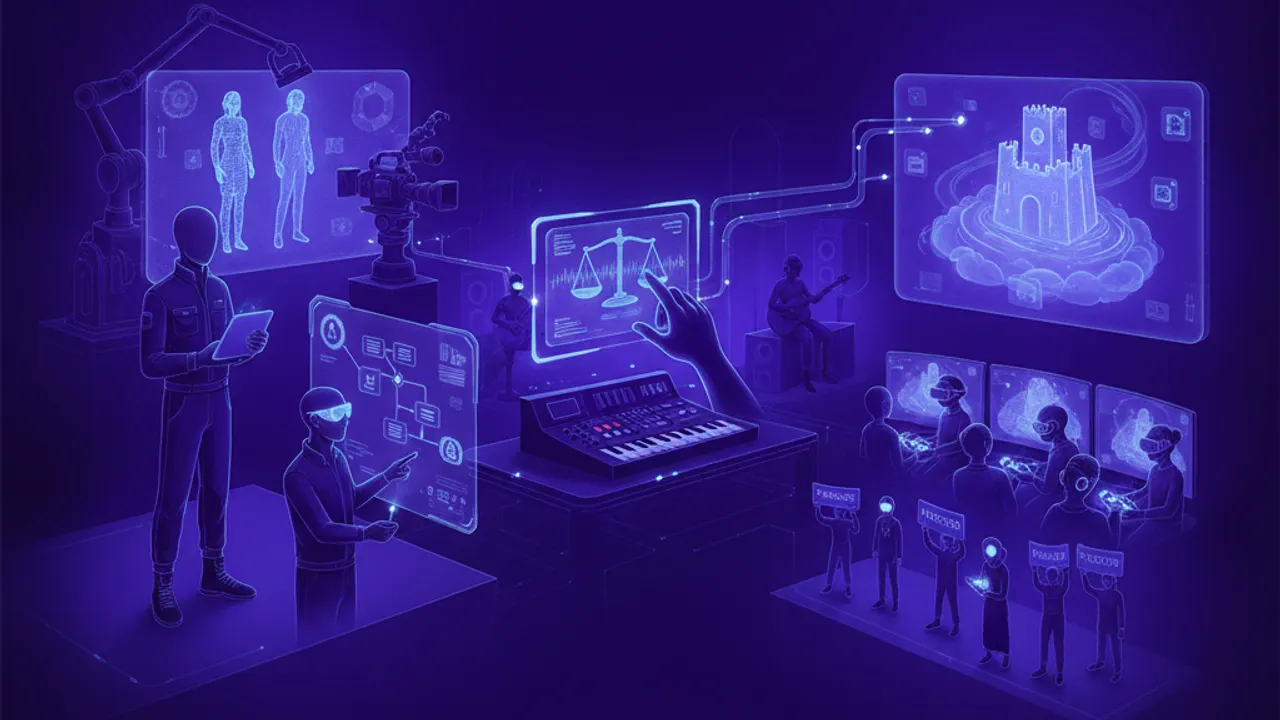
The legal environment surrounding generative artificial intelligence in the entertainment industry has tightened significantly following major court decisions and regulatory deadlines. A pivotal precedent was set by the Munich Regional Court I in late 2025 in the lawsuit GEMA versus OpenAI (Case 42 O 14139/24). The court determined that storing and generating copyrighted song lyrics using language models like ChatGPT constitutes copyright infringement. The judges explicitly clarified that text memorization is not covered by the text and data mining exception under section 44b of the German Copyright Act, establishing strict guidelines for European AI developers.
While Universal Music Group in October 2025 and Warner Music Group in November 2025 reached settlements with AI music services Udio and Suno to establish licensed opt-in models for artists, Sony Music chose legal confrontation. In July 2026, Sony Music filed a new lawsuit against Udio, alleging the unauthorized training of models on more than 30,000 recordings. The complaint highlights unlicensed YouTube scraping involving tracks from high-profile artists such as Beyoncé, Elvis Presley, and Alicia Keys. This escalation highlights growing friction between major rightsholders and developers of synthetic audio software.
Hollywood is also establishing binding frameworks to govern synthetic performers and digital replicas. In June 2026, the screen actors union SAG-AFTRA approved a four-year contract with the Alliance of Motion Picture and Television Producers with over 91 percent member consent. The agreement severely restricts the deployment of fully synthetic actors and mandates explicit consent for digital replicas. Furthermore, the contract establishes residual data royalties to ensure performers receive financial compensation whenever their voice or performance data is utilized for AI training.
Regulatory constraints are simultaneously taking effect across the European continent. Effective August 2, 2026, Article 50 of the EU AI Act enforces broad transparency and labeling rules for AI developers and deployment entities. Synthetic media, including generated images, audio, video, deepfakes, and text, must feature machine-readable watermarks. End users must also be clearly notified whenever content has been created or manipulated by artificial intelligence systems.
Alongside legal developments, technological deployments and business models across platforms are undergoing strategic shifts. OpenAI introduced Sora 2 in late September 2025 with physics simulation and synchronized audio, but shut down its standalone consumer app in April 2026 due to high operational costs, shifting entirely to API integration. In the music domain, streaming service Deezer reported that AI-generated tracks accounted for approximately 44 percent of daily uploads in the first half of 2026. In response, Spotify introduced labels to verify human-created tracks, while distributors such as CD Baby block fully synthetic releases lacking human authorship.
The video game industry reflects a split perspective regarding generative pipelines. According to the GDC State of the Games Industry Report 2026, 52 percent of surveyed developers reported using generative AI for coding assistance, research, or pre-production tasks. However, 52 percent also viewed the technology as a negative factor for the sector due to concerns over job security and potential quality degradation. Although major game engines integrate AI toolsets for asset creation, developers remain cautious about introducing pure AI content into finished commercial titles.